
Guide · water damage
The first hour after water damage.
What to do the moment you find water: stay safe, stop the source, document everything, and leave the tear-out to the professionals.
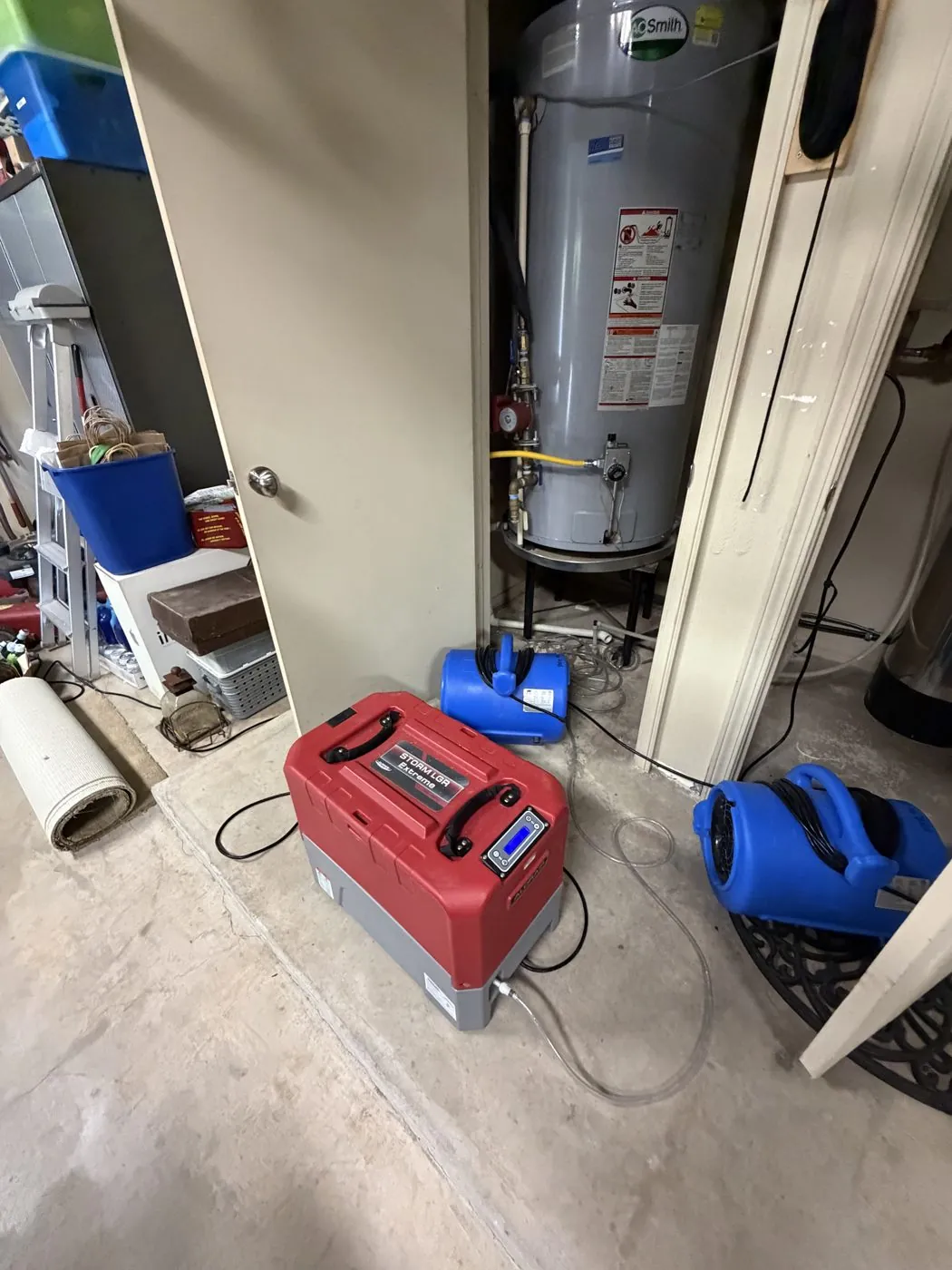
Water heater closet leak, drying in progress
What to do the moment you find water: stay safe, stop the source, document everything, and leave the tear-out to the professionals.
Check to make sure no electrical hazards are present. Avoid any areas that have sewage, sagging ceilings or any wet electrical devices.
If it’s accessible and safe to do so, shut off the water supply to whatever is causing the damage, or to the entire home if unsure.
Take pictures and videos of the affected areas. Try and capture the source of the water, and any damaged belongings, before moving or cleaning things up.
Move accessible items to a separate, dry area. Move furniture off of wet carpets and away from wet walls.
Household vacuums are not built to remove water, and aiming fans at sewage or microbial growth can make things worse in the long run.
You should avoid cutting into wet walls and flooring or even pulling any carpet. Everything should be assessed before removal.
No. We start with a complimentary assessment, no strings attached and no obligation. We use thermal imaging and moisture readings to see what’s actually wet. If the damage doesn’t need our equipment, we’ll say so.
Call us early. Policies have time limits for reporting a loss, and claims get denied when too much time goes by with no steps taken to stop the damage. Our free inspection shows you what’s actually wet and whether it’s worth a claim.
Yes. Phones are answered 24/7, nights and weekends included. Call or text (918) 550-2555.
Tell us how to reach you and we'll call you back to talk through what happened, and whether you actually need restoration.
Water actively coming in? Don't wait on a form. Call now, phones are answered 24/7.
(918) 550-2555