Home  /  Do I need restoration?
The question everyone asks first

Do I actually need water mitigation/restoration?

Short answer: not always. Whether you need it depends entirely on what caused it, where the water went, what materials were affected, and how much moisture remains. This page helps you recognize the signs—and if you’re unsure, we’ll check it out for you and give you honest feedback.

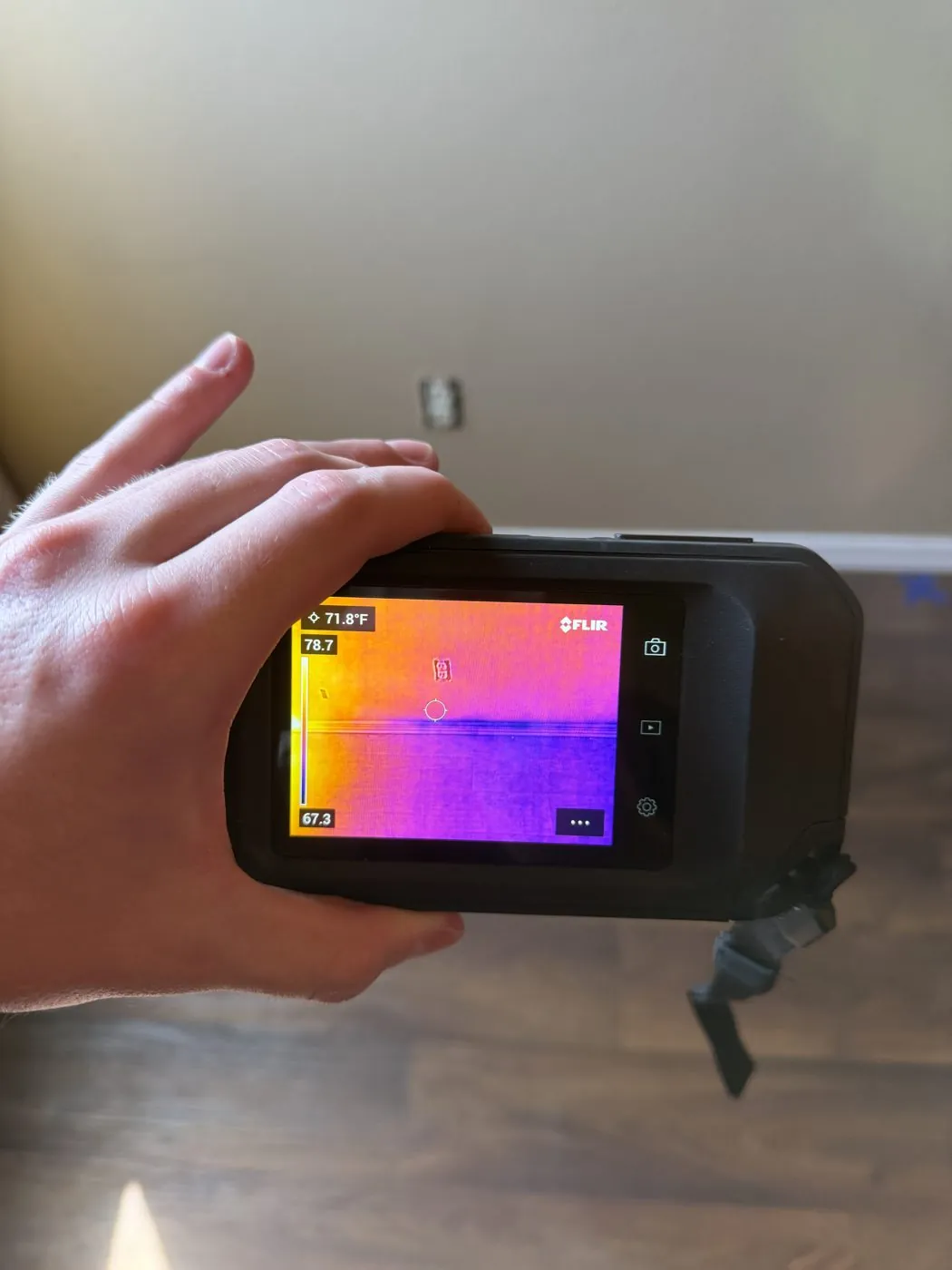
Nitro job · Tulsa metro: thermal camera check for hidden moisture
(918) 550-2555
Phones answered 24/7
support@nitrorestorationllc.com
Mobile service — we come to you
Free assessment · we bill insurance directly
Start here

You dried up the water, is the problem actually solved?

Even when the visible water is gone, moisture may still remain in the floors, walls, and other porous materials. Figuring out what’s still wet helps determine what comes next.

Your leak is fixed and the water appears to have dried up. It’s common to wonder whether you actually need a restoration company now.

Water is notorious for following the path of least resistance. It often travels a lot farther than you’d expect. Once it gets under flooring and cabinets or behind walls and baseboards, that moisture becomes a lot harder to see, but can still remain.

We’ve come up with a 6-point check to see whether your unique situation warrants us to take a closer look. However, checking one box doesn’t automatically mean you need restoration work performed, but that you should at least have a professional check things out.

If any of these apply, or you’re unsure about the damage that’s occurred, we offer a complimentary assessment to check moisture levels and see what needs more attention. Calling us out doesn’t commit you to a job. If you don’t need our work, we’ll tell you just that!

The 6-point check

If any of these are true, get it looked at.

One is enough. You don't need all six.

  • Water got into walls, floors, or cabinets. Water may have gotten into places impossible to inspect from the surface.
  • The affected area has a new or musty smell. One of these two things is a good reason for further investigating.
  • Materials look different or feel damp. Look for staining, discoloration, bubbling, swelling, or buckling.
  • The leak wasn’t caught immediately. If you don’t know how long it lasted for, the hidden moisture may have been worsening the damages.
  • The water came from an unsanitary source. Contaminants can stay in affected materials, and remaining moisture can cause microbial growth.
  • You’re considering filing an insurance claim. A professional inspection will show you the scope of the damages and whether a claim is appropriate or not for your situation.
Why waiting can make things worse

The more time that materials have to stay wet, the worse the damage is likely to be.

Spread

Moisture will travel

Water moves into nearby areas and hidden spaces. This can expand the affected area beyond what we can visibly see.

Damage

Materials will deteriorate

Floors can buckle, drywall can fall apart, and paint can peel. The longer water has to sit, the sooner materials become unsalvageable.

Growth

Mold will develop

Materials that stay wet become a breeding ground for microbial growth.

This is general water-damage behavior, not a guarantee about your house. Every structure dries differently, which is why the assessment happens on site with professional equipment instead of over the phone.

Before anybody gets there

What you can do right now

Make sure the area is safe

Check to make sure no electrical hazards are present. Avoid any areas that have sewage, sagging ceilings or any wet electrical devices.

Stop the water source if you can

If it’s accessible and safe to do so, shut off the water supply to whatever is causing the damage or to the entire home if unsure.

Document the damage

Take pictures and videos of the affected areas. Try and capture the source of the water, and any damaged belongings before moving or cleaning things up.

Protect your belongings

Move accessible items to a separate, dry area. Move furniture off of wet carpets and away from wet walls.

Avoid making the damage worse

Household vacuums are not built to remove water and aiming fans at sewage or microbial growth can make things worse in the long run.

Leave tear-out to the professionals

You should avoid cutting into wet walls and flooring or even pulling any carpet. Everything should be assessed before removal.

Questions we get on this exact call

Straight answers

Will you tell me if I don't need you?

Yes. That's the whole reason this page exists. We'd rather be the company you call next time than the one that sold you on services you didn't need.

Is the assessment really free?

Yes — complimentary, on site, no obligation. You get our read on whether the damage needs professional mitigation, and you decide from there.

My plumber already fixed the leak. Isn't it over?

The plumber stopped the water. What's left is everything the water got into — subfloor, wall cavity, insulation, cabinet bases. That part doesn't dry on its own.

What does water mitigation cost?

It depends on the size of the loss, and it can be fairly expensive. A water job usually has two or three parts: the emergency mitigation (dry-out and tear-out), which often runs several thousand dollars on its own; the reconstruction that puts everything back together; and sometimes contents pack-out. Added together on an insurance claim, we typically see anywhere from about $10,000 up to $100,000 depending on the damage. The inspection that tells you what you're actually dealing with is free.

Should I call my insurance company or you first?

Call us early. Policies have time limits for reporting a loss, and claims get denied when too much time goes by with no steps taken to stop the damage. Our free inspection shows you what's actually wet and whether it's worth a claim. And if you do file, you choose the contractor. You're under no obligation to use the insurance company's preferred vendor.

How fast can somebody get here?

Phones are answered 24/7, 365 days a year. Our goal is to be on site within 2 hours of your call anywhere in the Tulsa metro, and sometimes we're there in 30 minutes. Farther out it depends on distance, and we'll give you an honest arrival time when you call.

Keep reading

Related pages

Not sure if it's bad enough to call? That's exactly when to call.

(918) 550-2555
Free assessment · Tulsa metro · support@nitrorestorationllc.com
Free assessment

Schedule Your Free Assessment

Tell us how to reach you and we'll call you back to talk through what happened, and whether you actually need restoration.

Water actively coming in? Don't wait on a form. Call now, phones are answered 24/7.

(918) 550-2555

We only use your info to contact you about your assessment.